
Frequently Asked Questions
Answers to the most common questions about our products, orders, and setup.
Choosing the Right Product
Which system is right for me?
Blumat Drip System (12-Plant Kit): Waters up to 12 plants from a single reservoir or hose spigot. A ceramic sensor is pushed into the soil of each pot. The sensor is a moisture-sensing valve only — no water passes through it. When the soil dries out, the sensor opens a valve and water travels from your reservoir or spigot through 8mm supply tubing and out through a 3mm drip tube into the soil. When the soil is wet enough, the sensor closes the valve and watering stops. The ceramic senses. The tubing delivers.
Blumat Classic: A ceramic stake for one houseplant. You fill any container you already own — a vase, wine bottle, milk jug, fish bowl — with water, run a short length of 3mm tubing from that container to the ceramic stake in the soil, and water is drawn through the ceramic stake directly into the soil as the plant needs it. There are no drip points, no supply tubing, and no external pressure source. Water delivery happens through the ceramic itself, pulled by gravity and the natural moisture draw of the soil.
Blumat Easy: Works on the same principle as the Classic but uses a standard plastic bottle instead of a container you choose. Attach the adapter to almost any bottle up to 2 litres, pierce a small hole in the bottom to prevent a vacuum, and push the stake into the soil. A practical option for a quick setup or travel coverage.
The Blumat Classic. It is the more refined option — you choose your own container, the setup looks clean, and it will keep one pot watered for up to 10 days without attention. The Blumat Easy works the same way using a plastic bottle, which is a fine option if you want something fast and low-cost, but for a permanent indoor setup the Classic is the better choice.
The Blumat Drip System 12-Plant Kit. It connects up to 12 plants to one reservoir using tubing. Each plant is watered independently based on its own soil moisture level. You do not need to buy separate units for each plant.
The Blumat Drip System 12-Plant Kit. It is the standard choice for greenhouse and indoor cultivation. It works well with pots, containers, raised beds, and grow bags. Each ceramic sensor monitors moisture independently, so plants at different stages of growth or with different water needs are handled separately.
Yes. Because each ceramic sensor controls only its own pot, plants with different water needs can run on the same system at the same time. A plant that needs frequent watering and one that prefers drier conditions are each watered based on what their own soil requires. You set each sensor independently.
Yes. All Blumat products use food-safe materials and are suitable for vegetables, fruit, and herbs. The water that reaches your plants flows through the tubing and drip points only — it does not pass through any materials that would affect the safety of edible plants.
The 12-Plant Drip System
Setup, use, and what to expect
A timer system releases water on a fixed schedule regardless of whether the plants need it. If it rained the day before, the timer still waters. If conditions are unusually hot and dry, the timer does not water more.
The Blumat sensors only release water when the soil is dry enough to need it. When the soil has enough moisture, the valve stays closed. Each plant receives water based on its actual condition, not a fixed schedule.
No. The sensors respond to soil moisture, not weather. If the rain wets the soil enough, the sensors detect that moisture and keep the valves closed on their own. You do not need to turn off or adjust anything. The system will resume watering automatically once the soil dries out.
Nothing is damaged. If the water supply stops, the sensors simply stop delivering water. When the supply resumes, the system picks up from where it left off. The sensors do not need to be reset or re-primed after a short interruption.
After a long interruption, check that no air has entered the main supply line before relying on the system again. Run a little water through the line and confirm all sensors are dripping before leaving the system unattended.
You need a water reservoir. A standard 5-gallon plastic bucket works. The bucket must be placed at least 3 feet above your plants so gravity moves water through the tubing. Hardware stores sell these buckets for a few dollars.
If you want to connect to a garden hose or outdoor tap instead of a bucket, you also need the Pressure Reducer, sold separately on our site. Without it, the water pressure from a tap is too high for the sensors to work correctly.
Yes. The reservoir should not be placed more than 12 metres (about 39 feet) above your plants. Above that height the water pressure becomes too high for the sensors to regulate correctly, even without a pressurized tap connection. For most home setups this limit will never be an issue, but it is worth knowing if you are mounting a tank on a rooftop or upper story.
Most customers complete setup in 20 to 30 minutes. You soak the ceramic sensors in water for 15 minutes before installation. After that, you push the sensors into the soil, cut the tubing to length with scissors, and connect everything by hand. The kit includes a printed instruction sheet with diagrams for each step.
The 3mm drip tubing that runs from each sensor to the drip point should not exceed 50cm (about 20 inches). The 8mm main supply line that runs from the reservoir to the sensors can be considerably longer. If your plants are spread across a large area, keep the sensors close to the plants and run the main supply line across the distance instead.
The 5-inch sensors in this kit are designed for pots up to 10 gallons. For pots larger than 10 gallons, the 9-inch Maxi Sensors are available separately on our site. They reach deeper into the soil and connect to the same tubing system without any additional parts.
Each sensor has a small adjustment knob on top. You turn it to set the moisture level for that specific plant. The instructions explain which direction increases and which decreases water delivery.
During the first week, check the soil moisture by hand every two or three days and adjust the knob in small steps if needed. After that first week, the system does not need further adjustment unless you change the plant, the pot, or the type of soil.
Yes, provided the fertilizer is fully soluble in water. Any undissolved particles will clog the small-diameter tubing over time. Use a fertilizer labeled as fully water-soluble, mix it thoroughly before adding it to the reservoir, and flush the lines with clean water at the end of each growing season.
Do not inject fertilizer into the line between the tap and the Pressure Reducer. Add it directly to the reservoir or tank only.
Nothing changes. This system does not use electricity at any point. There are no pumps, no timers, and no electronic parts. Power outages have no effect on how the system works.
This system is designed for outdoor use. Blumat recommends against using it indoors when connected to a continuous water source and left without supervision. If a sensor is knocked out of a pot while you are away, water could flow onto your floor.
Many customers do use it indoors with a bucket reservoir without problems. If you use it indoors, stay nearby for the first few days to confirm all sensors are seated correctly and water is going only where it should.
Add-On Products
When you might need more
The Pressure Reducer lowers water pressure from a garden hose or outdoor tap to a level the Blumat sensors can work with. You only need it if you are connecting the system to a tap or hose. If you are using a gravity-fed bucket as your reservoir, you do not need the Pressure Reducer.
The 9-inch Maxi Sensors are a longer version of the ceramic sensors included in the 12-Plant Kit. They reach deeper into the soil and are designed for pots larger than 10 gallons. They connect to the same tubing system as the standard sensors and can be used alongside them if you have a mix of pot sizes.
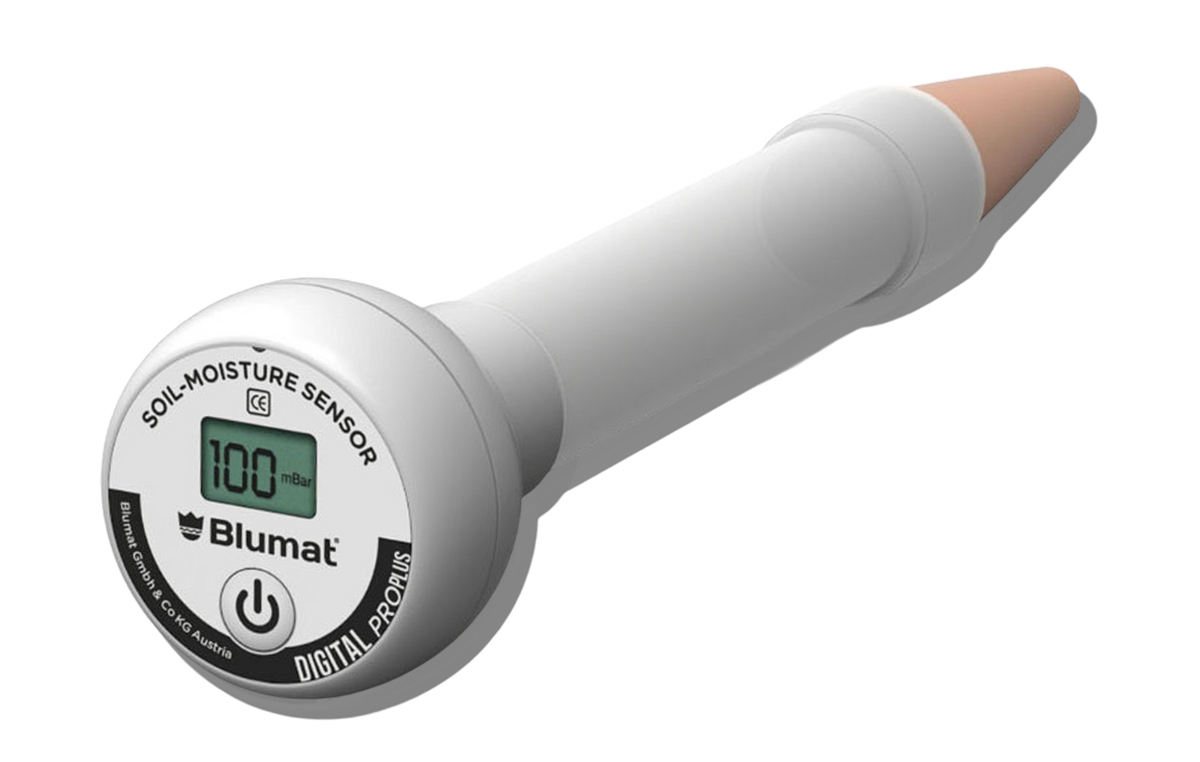
The Digital Soil Meter measures the moisture level in your soil and gives you an exact reading on a small display. It is useful during the initial setup of the Drip System when you are calibrating each sensor for the first time, and any time you want to check on a plant without guessing. Push it into the soil near the ceramic sensor, read the value, and remove it. It does not need to stay in the soil permanently.
First, make sure the probe is fully inserted into moist soil and not touching a rock, root, or the side of the pot. Readings taken in air, or with only the tip of the probe in the soil, will not be accurate. If the display has fogged up on the inside, the meter has been exposed to excess moisture — allow it to dry fully in a warm area before using it again.
The Digital Soil Meter is not waterproof. Do not submerge it or leave it in the soil during heavy watering. Remove it after taking a reading.
Distribution drippers are small fittings that attach to the 3mm outlet line on a Blumat sensor and split the water flow into multiple drip points. Instead of one drip point per sensor, you can have two, four, or more drip points spread across a larger pot or bed — all controlled by the same ceramic sensor.
The standard sensors in the 12-Plant Kit deliver water at one point per sensor. For pots up to about 10 gallons, one drip point is usually enough. For larger containers, wide grow bags, or raised beds where you want water distributed evenly across the root zone, distribution drippers give you that coverage without needing additional sensors.
You adjust a sensor the same way whether or not distribution drippers are attached. The sensor reads moisture and controls flow — the drippers just determine where that water is delivered.
Orders, Shipping, and Returns
Setup, use, and what to expect
All orders ship within 24 hours. You will receive an email with a tracking number as soon as your order leaves our facility.
Most orders arrive within 3 to 5 business days. Faster shipping options are available during checkout. The cost for each option is shown before you confirm payment.
Yes. Orders over $25 qualify for free standard shipping within the contiguous United States.
Contact us within 7 days of receiving your order. Include your order number and a photo of the damage. We will send a replacement at no additional cost.
RETURNS AND WARRANTY
Our guarantees
You can return any product within 30 days of receiving it for a full refund. The item must be in its original condition. You do not need to give a reason for the return.
To start a return, contact us with your order number. We will send you a return label and instructions.
Contact us and describe the issue. If the product arrived defective or was damaged in shipping, we will replace it at no cost. For items that were installed and used but are not defective, contact us and we will assess the situation individually.
Yes. All Blumat products carry a 36-month manufacturer warranty from the date of purchase. The warranty covers defects in materials and manufacturing. It does not cover damage from accidental breakage, freezing, or clogs caused by particulate matter in the water supply.
To make a warranty claim, contact us with your order number, a description of the issue, and a photo if possible. We will send a replacement part or a full replacement depending on what is needed.
Care and Maintenance
Keeping your system running correctly
For most users with clean water, the sensors only need a light rinse with clean water. If you use liquid nutrients in your water, clean the sensors at the start and end of each growing season. Scrub the ceramic gently with a soft brush and rinse with clean water. For mineral buildup, run a diluted white vinegar solution through the system and then flush with clean water.
Check these four things in order:
- Is the reservoir empty or running low?
- Is any part of the tubing kinked or pinched?
- Is the soil already wet? If the soil is moist enough, the sensor will keep the valve closed until it dries out.
- Is there air trapped in the sensor? Remove the sensor, resoak it in water for 15 minutes, and reinstall.
If all sensors stopped at the same time, the issue is usually upstream — check the reservoir, the main supply line, and the Pressure Reducer if you are using one.
No. Cold temperatures cause the ceramic to contract slightly and the moisture sensitivity to shift. Once temperatures rise during the day, the sensors return to normal behavior on their own. If dripping does not resume after the temperature has warmed, check for air in the sensor and resoak if needed.
No. Do not leave ceramic sensors in soil that will freeze. Water inside the ceramic expands when it freezes and can crack the ceramic. Remove sensors before the first frost, allow them to dry fully, and store them in a dry place above freezing temperature.

Authorized Distributor
We partner directly with Blumat to provide you with authentic, precision-engineered Austrian components.

Expert Support
Our team actually grows with these systems. We help you design the perfect setup for your greenhouse or garden.

3-Year Warranty
We stand behind our products. Every system is backed by a manufacturer’s warranty against defects.